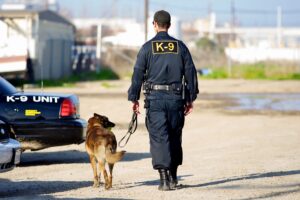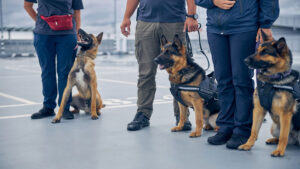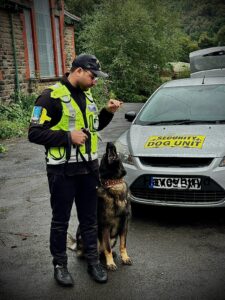
Security dogs in the UK undergo structured, professional training designed to meet high industry standards. These dogs are not simply pets — they are working animals trained to protect property, detect threats early, and safeguard their handlers. Their training follows recognised frameworks such as NASDU (National Association of Security Dog Users) or equivalent UK qualifications.
Here is how security dog training works in the UK.
- Foundation Training and Socialisation
Before any formal protection work begins, dogs must develop:
- Strong obedience
- Controlled behaviour around people
- Confidence in busy or noisy environments
- Stability around vehicles, machinery, and other dogs
- Obedience Training
Security dogs must respond instantly to their handler’s commands. Key skills include:
- Sit, stay, heel, recall
- Controlled walking on and off lead
- Remaining calm during distractions
- Focusing on the handler’s instructions
- NASDU-Level Protection Training
Under NASDU or comparable training standards, dogs learn:
- Controlled barking
- Deterrence posture
- Searching for intruders
- Indicating threats through behaviour
- Apprehending an offender under full control
All bite work is done professionally and safely using protective equipment.
The emphasis is always on control, discipline, and handler command, not aggression.
- Searching and Detection Skills Security dogs use their senses to detect:
- Hidden individuals
- Movement in dark or obscured areas
- Trespassers behind obstacles
- Intruders attempting to conceal themselves
- Environmental Training Dogs are trained in:
- Construction sites
- Warehouses
- Empty buildings
- Open fields
- Low-light or night-time conditions
- Welfare and Behaviour Monitoring
Security dogs must meet strict welfare standards, including:
- Proper rest
- Clean water and feeding schedules
- Veterinary checks
- Temperature monitoring
- Regular exercise
- Ongoing Assessments and Annual Licensing Professional K9 teams complete:
- Regular obedience refreshers
- Scenario-based training
- Handler competency assessments
- Annual certification
- The Handler–Dog Partnership
A security dog is only as effective as its handler. Handlers must:
- Build trust
- Understand the dog’s communication cues
- Respond to early warning signals
- Maintain discipline and control
Proper training turns a dog into one of the strongest security assets available.